
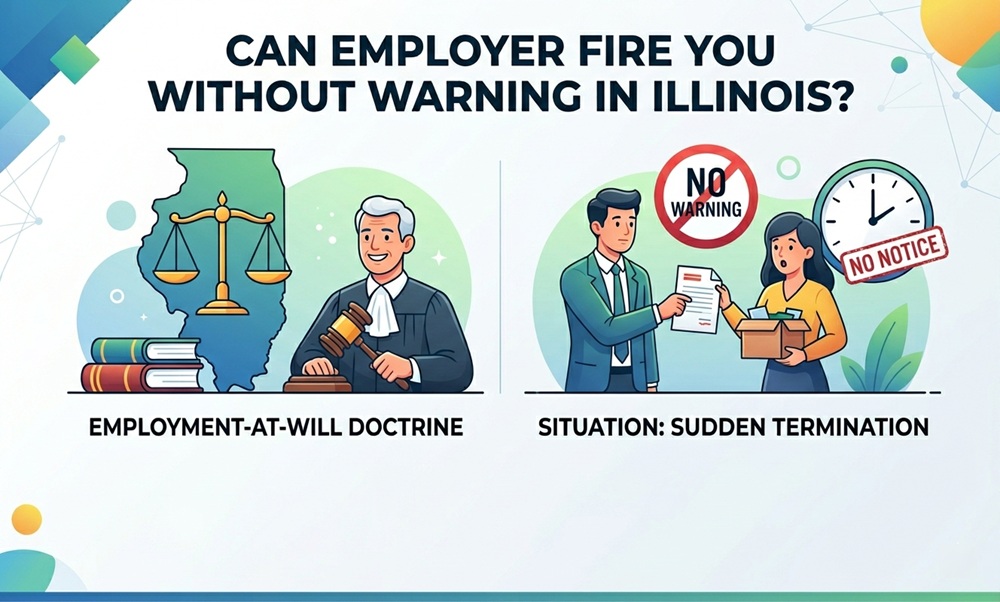

You showed up to work on a Tuesday, did your job, and by Friday you’re clearing out your desk — no explanation, no written warning, nothing. It’s shocking, and it raises one very real question: is this even legal?
In Illinois, the short answer is usually yes. But “usually” is doing a lot of work in that sentence. Here’s what you actually need to know.
Illinois Is an At-Will Employment State
Illinois follows the at-will employment doctrine, which means your employer can terminate your job at any time, for any reason — or even no reason at all — without giving you advance notice or a written warning.
Likewise, you can quit whenever you want. The relationship goes both ways.
This surprises a lot of people. Many workers assume a formal write-up system or a three-strikes policy is required by law. It’s not. Those are company policies, not legal mandates.
When Firing Without Warning Is NOT Legal
Here’s where things get more nuanced — and where your rights matter most.
Even in an at-will state, your employer cannot fire you for illegal reasons. Illinois law (and federal law) prohibits termination based on:
- Race, gender, religion, national origin, or age (Title VII and the Illinois Human Rights Act)
- Disability (ADA and Illinois law)
- Pregnancy (Pregnancy Discrimination Act)
- Filing a workers’ compensation claim
- Whistleblowing or reporting safety violations
- Union activity or organizing
- Taking FMLA leave
If your firing falls into any of these categories, you may have a wrongful termination claim — even without a formal warning process.
What About Employment Contracts?
If you signed an employment contract that specifies a termination process — like written warnings or a performance improvement plan — your employer is legally bound to follow it.
Similarly, union members covered by a collective bargaining agreement often have “just cause” protections, meaning employers must show a legitimate reason and follow specific steps before firing.
Real-World Example
Consider this: A warehouse worker in Chicago was fired the same day she returned from maternity leave. No warning, no explanation. Because the termination closely followed protected leave, she had grounds to file a retaliation claim under FMLA — and eventually reached a settlement.
The lesson? Timing and context matter enormously.
What to Do If You Were Fired Without Warning
- Request a written explanation from HR or your manager
- Gather documentation — emails, performance reviews, any communications
- Review your employment contract or employee handbook
- File a complaint with the Illinois Department of Human Rights (IDHR) if discrimination is suspected
- Consult an employment attorney — many offer free initial consultations
Pro Tips from Employment Law Experts
Document everything from day one. If you ever feel targeted at work — sudden criticism after a complaint, exclusion from meetings after FMLA leave — keep a written record with dates. Courts rely heavily on documented patterns.
Common Mistakes to Avoid
- Signing a severance agreement too quickly — you may be waiving your right to sue
- Assuming HR is on your side — HR represents the company, not you
- Waiting too long to act — Illinois IDHR complaints typically must be filed within 300 days of the termination
FAQs
Q: Can I be fired without any reason in Illinois? Yes, under at-will employment. But reasons tied to protected characteristics are illegal.
Q: Does Illinois require two weeks’ notice before firing someone? No. Neither the employer nor employee is legally required to give notice.
Q: What qualifies as wrongful termination in Illinois? Termination based on discrimination, retaliation, or breach of contract qualifies as wrongful termination.
Q: Can I collect unemployment if fired without warning in Illinois? Generally yes, if you were fired without misconduct on your part. Apply through the Illinois Department of Employment Security (IDES).
Conclusion
Being fired without warning is jarring — but in Illinois, it’s often legal. What matters is why you were fired. If protected characteristics, retaliation, or a contract breach played any role, you likely have legal options. Don’t sign anything under pressure, document what you remember while it’s fresh, and speak with an employment attorney if something feels off.